
Boiled sausage is a fully cooked meat product and one of the most popular items in the ready-to-eat category. Its advantages include a versatile taste and easy use.
There are countless boiled sausage recipes, and producers try to offer products that match consumers’ tastes and preferences. In Georgia, the most popular types in this category are Saekimo and Mokvarulta.
When evaluating boiled sausage, there are five key factors that determine its quality.
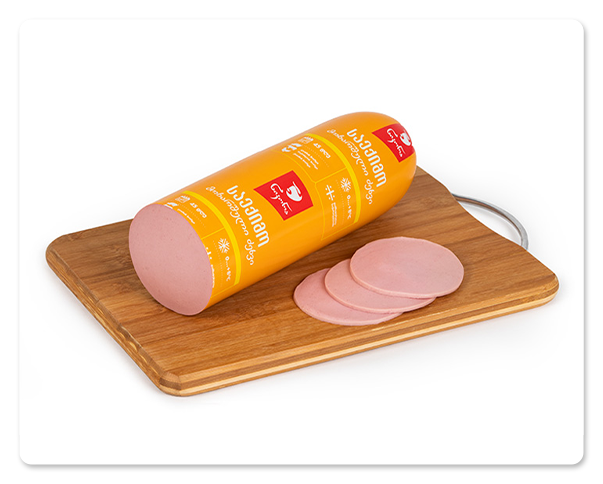
Casing
Boiled sausage can come in natural or polyamide casings. For polyamide casings, make sure the casing is not wrinkled or damaged. Also, when slicing, there should be no gelatinous layer between the casing and the meat.
Consistency
The meat product should have a uniform texture. Large inclusions should not be present unless typical for that specific type, such as beer sausage or smoked varieties.
Color
The color of boiled sausage should be an appealing pink. It should not be too dark or too pale.
Aroma
The aroma of boiled sausage should be pleasant and characteristic of the specific product type.
Taste
There isn’t a single standard for taste because it varies depending on the type and ingredients. The flavor depends on which meat cuts are used and which spices are included. The main point is that the taste should be enjoyable and appropriate for that particular variety.
Once you’ve chosen the boiled sausage you want, it’s important to follow proper storage rules:
- Store boiled sausage in the refrigerator at 0-8°C (32-46°F).
- Sausage in natural casing has a shorter shelf life: about 7-10 days.
- Sausage in polyamide casing lasts longer: around 1-2 months, depending on the casing type and production method. Multi-layer casings generally extend shelf life.
- Pre-sliced boiled sausage should be consumed within 3 days.